Introduce AI strategically — with sovereignty, resilience, and open source.
I help companies build durable foundations for AI: through clear prioritization, sound architecture decisions, and technological sovereignty.
Technological sovereignty does not come from software alone, but from your organization’s ability to make and execute the right decisions. I build that capability with your decision-makers and your tech team.
Schedule a conversationWhat causes many AI initiatives to fail
Strategy gap
AI is on the agenda, but pilot projects are not turning into a scalable operating model. What is missing are priorities, architecture, and a credible target picture.
Technology sprawl
Business units and analytics teams are experimenting in parallel with different tools, platforms, and vendors. That increases complexity, cost, and governance risk.
Lost in the hype
The market produces new promises every day. The real question is not what is new, but what is economically, technically, and regulatorily viable in your context.
AI agents without guardrails
The potential is high, but guardrails, clear boundaries, and operational governance are missing. Without robust safeguards, AI agents create risk rather than value.
Execution bottleneck
The direction is clear, but business, technology, and leadership are not operating from the same logic. Decisions stall, and execution slows down.
Outdated mindset
AI does not create impact by digitizing existing routines, but by redesigning how decisions are made and how work gets done.
If you recognize your organization in any of these points, now is the right time for a sound decision.
How I Work
AI Strategy with Execution Foundation
- A prioritized AI roadmap: what creates value now, what becomes relevant later, and what is deliberately left out.
- Clear decisions on build vs. buy, open source, platforms, and agents — well-founded, realistic, and actionable.
- Independent assessment of vendors and solution approaches: I separate substance from sales rhetoric.
- Roadmaps that hold up in execution because they align technical reality, governance, and the organization.
Execution Governance for AI Transformation
- I validate architecture decisions, steer external partners, and keep execution on track.
- I create alignment between board, business functions, and tech teams — so decisions actually translate into results.
- As an independent challenger, I review internal roadmaps, vendor proposals, and target architectures — without political or commercial bias.
- My goal is not dependency, but capability: your team should be able to move forward confidently after the mandate.
C-Level Sparring
- Validation of strategic decisions before misinvestment, architectural problems, or vendor lock-in take hold.
- An independent counterpart with technical depth and operational experience — with no sales interest in any particular solution.
- Executive-level judgment grounded in hands-on experience across architecture, technology, and transformation.
Interim Leadership Mandate
- I take on leadership responsibility when AI, data, or analytics capabilities need to be built, stabilized, or bridged.
- I make decisions with operational impact: for teams, target operating models, architecture, and the management of internal and external delivery partners.
- You get the accountability of a leadership role without a long-term commitment.
- Titles are secondary. What matters is that the function is filled effectively.
What Sets Me Apart
Foundation over short-termism
I do not chase short-term effects. I work toward the technological and organizational foundations on which resilient AI capability is built: with clear standards, viable architecture, and the discipline to leave out what does not matter. Shaped by more than 20 years of practice — not by trend cycles.
From boardroom to code
I move credibly between C-level, business functions, and engineering because I do not just present strategy — I assess it technically and translate it all the way into architecture decisions. That reduces friction, accelerates decisions, and prevents costly misunderstandings.
Independence as a foundation
I do not sell software, licenses, or implementation. My recommendations are guided solely by your situation and your interests. Open source is not an article of faith for me, but a structural advantage: auditable code, less dependency, stronger auditability, and greater control — especially in regulated environments.
What this looks like in practice
Strategic lead and architecture decisions — implemented by the internal team and partners
Legacy C# and SAS silos separated research, portfolio management, and engineering. Long release cycles, limited ESG capability, and a lack of traceability put speed, control, and compliance at risk.
Migration of the organization to Python and open source. Deployment cycles dropped from three months to three weeks; 44 employees were upskilled across four cohorts. The result was a stack that supports traceability, auditability, and regulatory requirements in a financial-services environment.
Learn more →Strategic lead, employee survey & AI prototype — implemented by an external team
More than 30 years of project data, 70% manual processing, and no reliable data foundation. Publicly funded information was trapped in silos; AI potential could not be put to operational use.
Development of a data strategy with a 120-page implementation roadmap. An AI-supported forecasting model for workforce planning achieved 90% accuracy; the planning cycle shifted from annual to continuous.
Learn more →Strategic concept, NLP architecture, and prototype development — further expanded by the internal team
More than 10,000 research documents spanning three decades: unstructured, confidential, and nearly impossible to search. Cloud and API usage were ruled out.
Built an NLP-based knowledge explorer that turned static document storage into search results in seconds. Topics, related contexts, and source documents became directly accessible — fully on-premises, with no external APIs and no LLMs. The internal team subsequently expanded the solution further.
Learn more →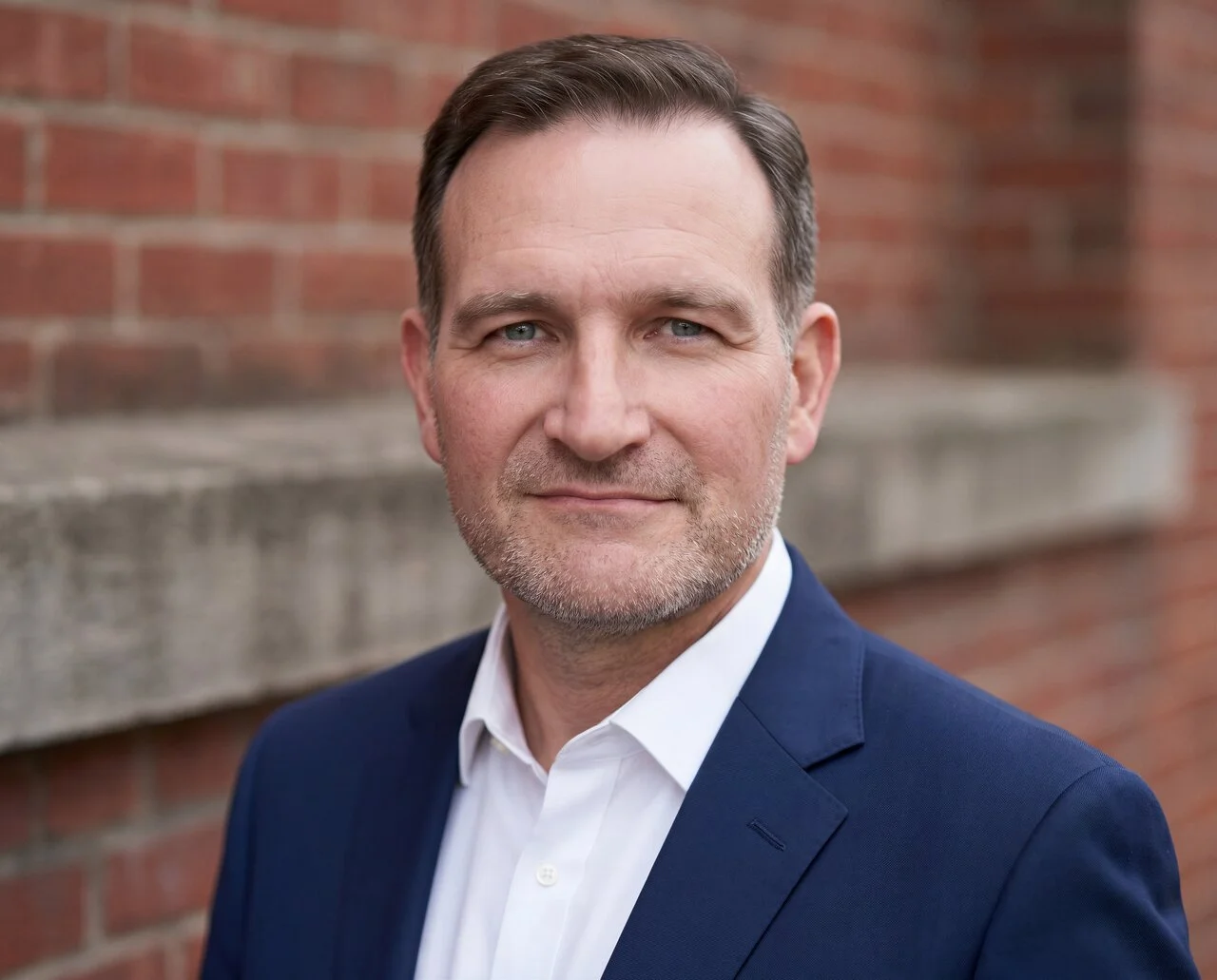
Alexander C.S. Hendorf
Open source did not become relevant to me because of ideology, but because of responsibility. More than 20 years ago, I saw firsthand what technological dependencies cost companies. As COO of a transatlantic music company that I helped build, I learned that resilient structures emerge where companies retain control over their own ability to execute.
Since then, I have worked at the intersection of open source, AI, and business transformation — initially as a developer, then as an architect, and today as a strategic advisor to companies in regulated industries. I bring together strategic perspective and technical substance: from questions shaped by BaFin and DORA to privacy-compliant architecture and resilient AI systems.
When I recommend a technology, I know it from practice. More than 50 technologies across two decades — including the Python ecosystem, vector databases, and workflow orchestration. That allows me to speak with boards about risk and priorities, and with tech teams about the architecture that holds up in execution.
Through my work in the European AI and open-source community, I stay close to the developments and debates that matter to companies. My clients benefit from that directly.
Let’s talk
The initial conversation lasts around 30 minutes and is meant to provide a clear assessment of your situation. I work with companies that treat AI as a strategic decision — one that affects architecture, organization, and value creation. If a concrete strategic choice is ahead of you, send me a brief note outlining your industry, starting point, and timeframe. I will reply personally.
First-hand insight
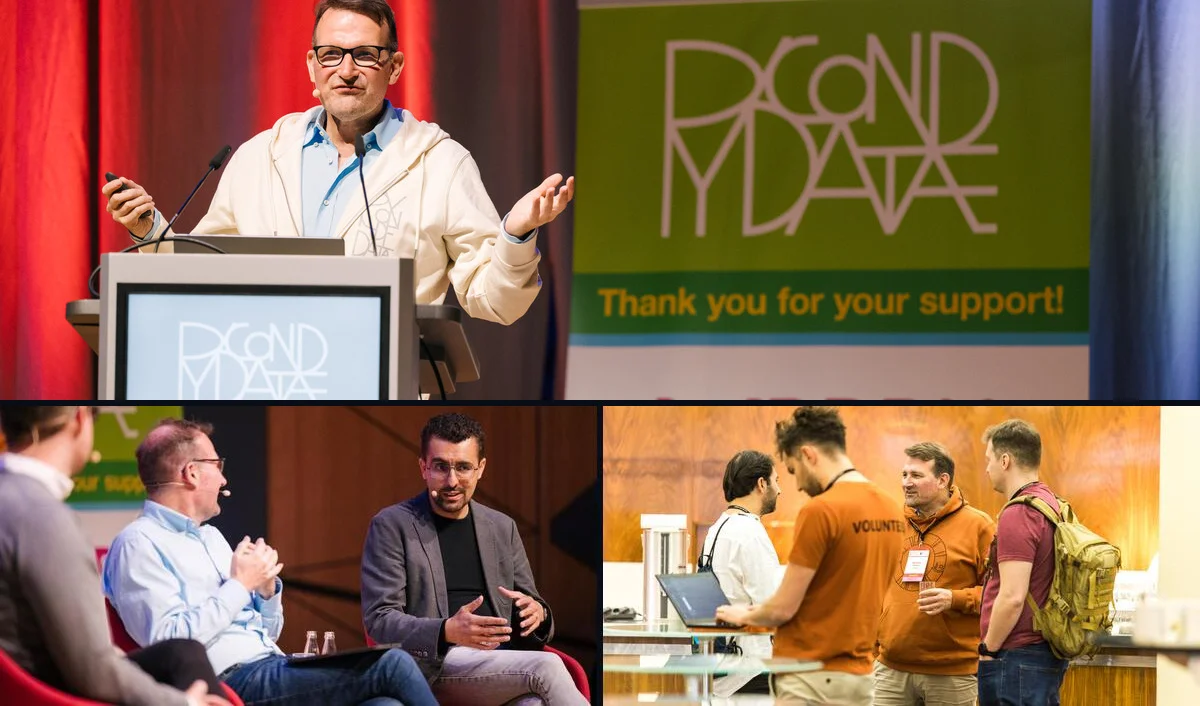
What I discuss at international conferences flows directly into my client work: not as second-hand trend commentary, but as direct insight into the debates, technologies, and fault lines that matter to companies in practice.